

Helping your Child Sleep in their Own Bed

For many of you, your child sleeping in your bed may not be a problem, and it’s entirely up to you to decide when it is the right time for them to sleep in their bed. Many parents think that it is more manageable before their child attends school. When you are in a habit, it can be hard to believe that you can change or think there could be several advantages to your child sleeping in their bed.

What the research actually shows

There is no fixed age at which a child should move into their own bed, and research suggests healthy co-sleeping does not negatively affect a child’s personality or mental health many children develop the readiness for independent sleep somewhere between three and six, though some take longer, and that is completely normal What the evidence does say clearly is that forcing separation too early, or too abruptly, can increase anxiety and make the whole process harder, not easier Gentle, gradual, and led by your child’s own readiness tends to work far better than a sudden change. However, you might need to be mindful, you may be maintaining anxiety especially separation anxiety.

The advantages of your child sleeping in their own bed

A child who sleeps independently is practising a genuine skill: self-soothing, the ability to settle and calm themselves when they feel worried or unsettled. This connects closely to emotional regulation more broadly, something I explore further in Is Your Child Emotionally Dysregulated? and in Practical Steps to Help Your Child Self-Soothe, which goes into this in real depth.

Increased confidence in being independent

There is also real pride to be found here. Children who know they can manage something independently of their parents build a genuine sense of autonomy and competence, one small accomplishment layered on another. And it helps children understand, gently, that their parents have their own separate relationship too. It is not always helpful for a child to feel they sit permanently at the very centre of that.

Most children go through a phase of fearing monsters or the dark, and most grow out of it in time, returning successfully to their own bed once those fears have settled. If nighttime fears are a bigger part of what is going on in your house, my blog Understanding the Link Between Sleep Problems and Nighttime Fears covers this specifically, and my free guide When Darkness Comes was written exactly for this, helping your child feel calm and safe at night.

How to make the transition gently

The way I teach this is to start with naming the worry itself, out loud, together. Ask your child what feels hard about sleeping in their own bed, and really listen to the answer, even if it seems small to you. Once a worry has a name, it becomes something you can work with together, rather than something looming and formless in the dark.

If your child is old enough, this is also the moment to bring in whatever self-soothing tools you have already been building together, a breathing technique, a transitional object, a self-soothe box, whatever has worked for them before. You are not asking them to face this with nothing.

Use a ladder or step approach

Then tell them, clearly and in simple steps, exactly what is going to happen. Children feel safe through predictability, not through vagueness, so rather than a general “we’re going to try you in your own bed,” walk them through it: first we will read a story together in your room, then I will stay while you settle, then I will check on you after five minutes, and so on. Knowing the shape of what is coming, rather than facing an open-ended unknown, is often what actually makes it feel manageable.

Play it out

For younger children especially, playing this out beforehand with toys or figures can help enormously. Act out a small toy going to bed in their own space, feeling a bit worried, using their soothing tool, and settling. Children often process through play far more easily than through a direct conversation, and rehearsing it this way in the daytime, when nobody is tired or anxious, makes the real thing at bedtime feel familiar rather than frightening.

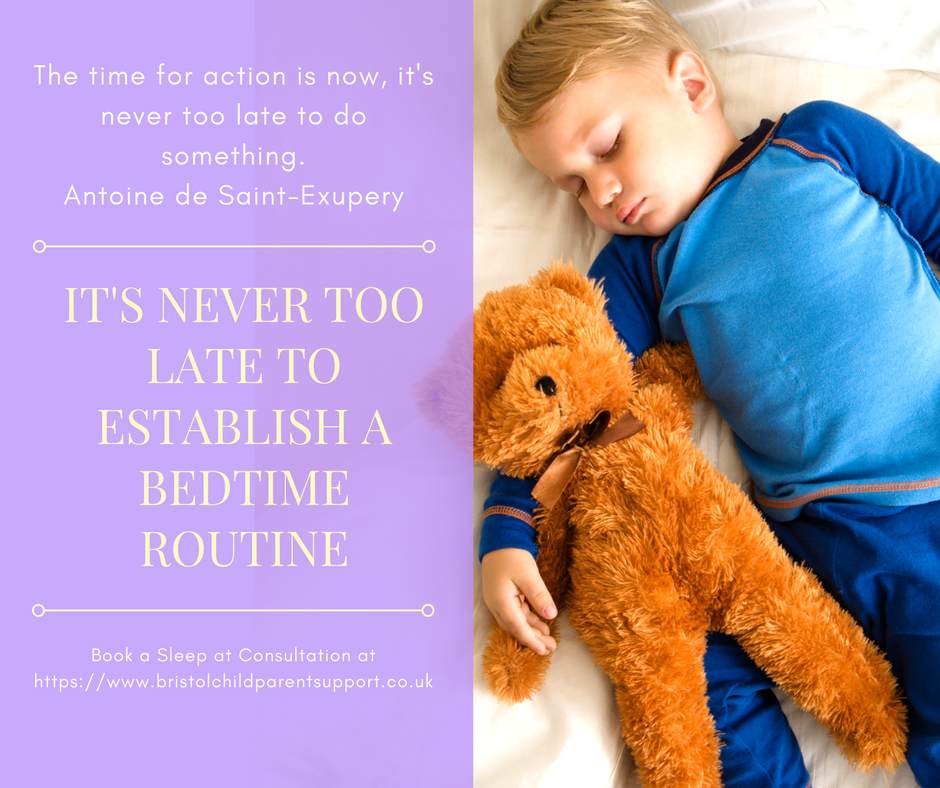
It is never too late to make this change, and there is no need to rush it. Whatever pace works for your family is the right pace.

Interested in working with me?

If you would like more tailored support for your child or family, I offer sleep consultations, one to one therapy for children and young people, and therapeutic parenting support for parents. Please do get in touch if you would like to find out more.

You can reach me via my contact page.

Free resources

Understanding Your Child’s Guard Dog Brain explains what is happening in your child’s nervous system when big feelings take over.

Holding in the Storm is about staying steady as a parent in the hard moments.

When Darkness Comes is my full guide dedicated to helping your child sleep, including support for anxiety and nighttime fears.

All free to download.

Related reading

The Importance of Self-Soothing for Sleep

Practical Steps to Help Your Child Self-Soothe

Understanding the Link Between Sleep Problems and Nighttime Fears

Why Won’t My Child Sleep? Understanding Insomnia and What Actually Helps

Does My Child Have Separation Anxiety?

And if you would like occasional guidance and support straight to your inbox, you are very welcome to join my newsletter.

With warmth,
Catherine

Share via
Copy link
Powered by Social Snap