
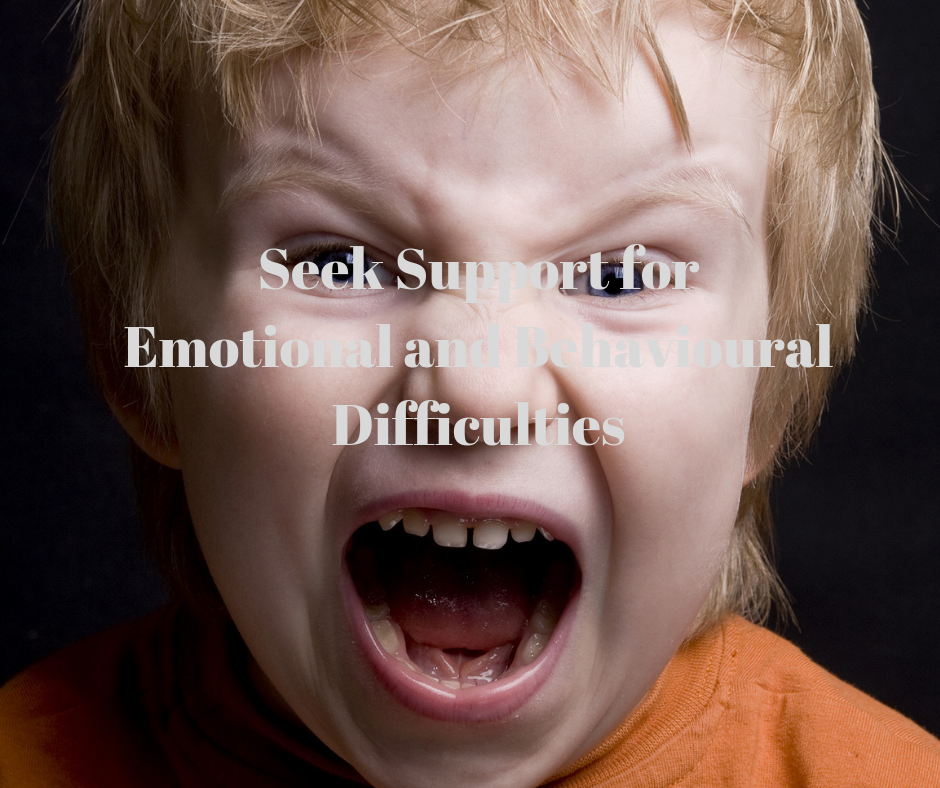
Emotional and Behavioural Difficulties

Emotional Regulation and Behaviour: Supporting Your Child

Children are not born knowing how to manage their feelings. That capacity develops slowly, over years, shaped by their temperament, their relationships, and the environment around them. And it takes much longer than most people realise. Self regulation continues to develop until around the age of twenty five.

That is a long time. And in the meantime, the gap between what a child feels and what they can do with that feeling can be enormous.

Research shows that the way we interact with our children, particularly in the early years, has long term effects on their brain development, emotional regulation, and wellbeing. The Center on the Developing Child at Harvard University explains this clearly in a short accessible video well worth watching.

I work with children, young people, and their families from birth to eighteen. Whatever age your child is, and whatever is making things hard right now, you do not have to figure it out alone.

Why some children find it harder

Between the ages of nought and seven it is completely normal for children to struggle with planning, organising, making decisions, shifting between tasks, controlling impulses, and learning from mistakes. These are executive functioning skills and they are still being built.

This is why young children have tantrums, hit, bite, kick, run into roads, struggle with siblings, and find it hard to follow instructions. It is not bad behaviour. It is a brain that is not yet ready to do what we are asking of it.

But some children find regulation harder than others, and for longer. Temperament plays a part. A child with an intense or sensitive nature will need more support, more consistently. A parent’s own mental health and stress levels matter too. And sometimes there are other factors at play, attachment difficulties, neurodiversity, trauma, or family circumstances that make everything harder.

You can read more about why children struggle with emotional regulation and what shapes it in my blog here.

What this can look like

In younger children it might be meltdowns, hitting, biting, or kicking. Difficulty getting dressed, following instructions, or managing transitions. Struggling with siblings or with school.

In older children and teenagers it can look different. Oppositional behaviour, emotional outbursts, withdrawal, difficulty managing friendships, or struggling to cope with the demands of school. It can show up as anxiety. Or anger. Or a quiet, persistent flatness that is hard to name.

Whatever age your child is, the underlying need is usually the same. To feel safe, understood, and not alone with what they are carrying.

Parents come to me for all sorts of reasons. They may have read every parenting book and tried everything and nothing seems to work or seem out of control or overwhelmed. They may be finding it hard to enjoy their child, and that is painful to admit. Or they simply want a space to think things through with someone who understands.

Why parents come to me

I am a clinician with over twenty six years of experience working with children, young people, and families. I am also a parent who has navigated all of these stages myself. Both things inform how I work.

Research shows that the way we interact with our children, particularly in the early years, has long term effects on their brain development, emotional regulation, and wellbeing. The Harvard Developing Child Institute explains this clearly and accessibly if you would like to read more.

How I can help

I work with children and young people from birth to eighteen, and with their parents. My approach draws on attachment theory, nervous system regulation, and over two decades of clinical experience.

I offer play therapy and the World technique, for younger children which uses a sand tray and miniature figures to help children express and make sense of their inner world without needing words.

For older children and teenagers I offer talking therapy, adapted to their age and what they need.

For parents I offer one to one sessions to think through strategies, understand what is driving your child’s behaviour, and find approaches that work for your family specifically.

I also offer training and consultation for professionals working with children and families.

If you would like to talk, please do get in touch via my contact page.

Free resources

If you are looking for something to help right now, my free guides are a good place to start.

Understanding Your Child’s Guard Dog Brain explains what is happening in your child’s nervous system when big feelings take over.

Holding in the Storm is about staying steady as a parent in the hard moments.

Both are free to download.

And if you would like occasional guidance and free resources straight to your inbox, you are very welcome to join my newsletter.

With warmth,
Catherine

Share via
Copy link
Powered by Social Snap